
Yeh
kooche yeh neelam-ghar dilkashi ke
Ye lutte
hue karvaan zindagi ke
Kahan hai
kahan hai muhafiz khudi ke
yahaan
peer bhi aa chuke hain jawaan bhi
tanomand
bete bhi, ha ha abbaa miyaan bhi (also the lusty sons, even their father!)
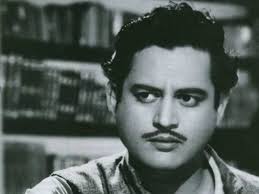
The song from reflects the cynical and gloomy side of Guru Dutt, the
greatest intellectual, philosopher, whose movies have left an indelible imprint
on the movie lovers globally. Many books have been written on him. Guru Dutt
saw the film making as a medium to reflect the crude realities of
life. Guru Dutt movies are philosophical. He is the only filmmaker from India, whose
films and directions are hailed by the global media, press, critics, film makers,
Magazines and journals equally. His name is written in golden words in Times
Magazine, Sight & sound and IMDB. In this piece from the Sight & Sound
archive, Mark Cousins highlights “one of the great, brooding figures in
post-Independence Indian cinema”: an actor-director who brought stillness,
self-criticism and unexpected pessimism to the whirl of Indian melodrama,
making himself its Orson Welles.
Corruption, existing at all levels of all societies
in varying degrees, is a behavioural consequence of power and greed, the
massive corruption which is perpetuating unabated is giving a severe setback to
the social balance. Guru Dutt was one such director who exposes this rot but
unfortunately succumbs to the outcome of the frustrations of the white-collar
system, Since, he was gazing long enough into an abyss, the abyss have
gaze backed into him, taking his life.”
The people who have been closely associated with
him have revealed that Guru Dutt was suffering from self-actualization needs
as put by Abram Maslow as highest intellectual need. He was unsatisfied
personality. Despite making the movies like Pyassa, Kagaz ke phool, Sahib biwi aur Ghulam and Chadhvi Ka chand. All
masterpieces and cult classics, he was yearning for more as if there
was lot of flaws in the movies. He was suffering from OCPD- Obsessive-compulsive
personality disorder characterized by extreme perfectionism. As a result
he tried to commit suicide three times in his life and finally succumbed in
1964. His death still remains to be a mystery that if he committed suicide or
was an accidental death by consuming alcohol with sleeping pills.
This perfectionist got
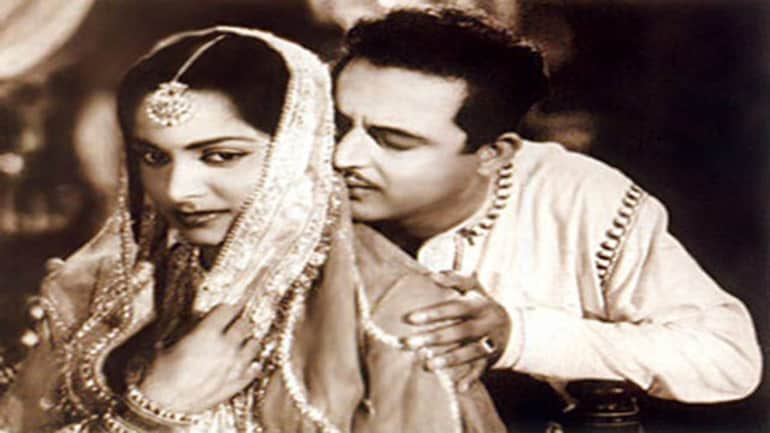
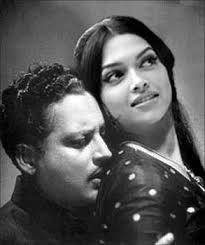
stuck between his talent, his wife Geeta Dutt and Waheeda Rehman.
He got romantically inclined towards actress Waheeda Rehman despite marrying to Geeta Dutt. Many people claim
the relation between Guru Dutt and Wahida as, Guru & Shishya (Teacher &
Disciple). But majority of the people claim, that he was romantically
inclining towards Waheeda Rehman as depicted in his movie ” Kagaz Ke
phool” showing an extra martial relationship of a director with an
actresses, Which is the crude reality of the Bollywood. We have too many real
examples. Boney
kapoor & Sridevi;Aditya Chopra
and Rani Mukherjee; Anurag Kashyap and Kalki , Koechlin; Mahesh Bhatt
and Soni Razdan;Prakash Jha and Deepti Naval;Sarika and Kamal Hassan and the list is never
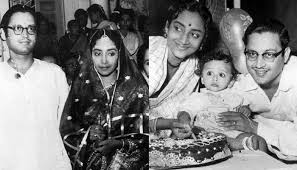
ending. This took a toll on his married life which resulted in regular fights.
Their financial issues too peaked up and they had to move out from their
bungalow. While Dutt rented a posh flat at the Peddar Road vicinity of Mumbai,
Geeta returned to her mother’s place with the children.
One thing is very clear, that he was a perfectionist and as a result was
never satisfied with his work and was unable to take failures. Contrary to a general belief about the viability of his
film projects, Dutt more or less produced commercially successful films and
there was no reason to be frustrated with the failure of ” Kaggaz
Ke Phool” which is one of the greatest movie ever made by
any director in any language in India after Pyassa. The
movie was a cult classic but didn’t go well with the Indian audience, who
viewed the subject as Tabooed, since it uncovers the controversial topic of
“extramarital relationship ‘.
Kagaz Ke phool was as an intense disappointment. He had invested a
great deal of love, money, and energy in this film, which was a self-absorbed
tale of a famous director (played by Guru Dutt) who falls in love with an
actress (played by Waheeda Rehman, Dutt’s real-life love interest). Kaagaz Ke Phool failed at
the box office and Dutt was devastated. All subsequent films from his studio
were, thereafter, officially headed by other directors since Dutt felt that his
name was anathema to the box office. Waheeda Rehman’s character was based on
real life character. Abrar Alvi when he visited Mumbai with his friends
they went to red light area where they met a girl called Gulabo. Alvi claimed that it was the first time she
was given such respect in life rather than abuses the same lines were used by
Abrar Alvi in films.
Raj Kapoor invested too much on dis dream project. Mera Naaam Joker, which failed too, the same way as Kagaz Ke
phool of Guru Dutt, but Raj Kappor bounced back and produced a
commercially success movie Bobby
recovering all the losses suffered from Joker, but unfortunately Guru Dutt was
unable to do so. He went into severe depression and did not direct any movie
post the failure of Kagaz ke Phool, as he considered his name to be s unlucky.
But everybody knows that he ghost directed the cult classic ” Sahib,
biwi aur Ghulam” as Abrar alvi the story writer of his films could
not have directed the film ” Sahib, biwi aur Ghulam” the way it was
directed. The Film reflects a unique and distinct style of Guru Dutt. As
the public, we usually only learn about these individuals and their companies
once they have made it big. We admire their success yet rarely witness the
immense struggle they went through to get there. By not being exposed to their
failures, we are unfortunately only left to compare ourselves to their
achievements. Be Guru Dutt or Sushant Singh, we make them famous post
their deaths only.
जब हम चलें तो साथ हमारा साया भी न दे
जब तुम चलो ज़मीं चले आस्मां चले
जब हम रुकें तो साथ रुके शम–ए–बेकसी
जब तुम रुको बहार रुके चाँदनी रुके
हम ग़मज़दा हैं, लाएं कहाँ से खुशी के गीत
देंगे वोही हो पाएंगे इस ज़िंदगी से हम
The above song from his movie Pyassa reflects a chasm
between have and have-nots. It displays the tainted reflection and
reciprocation of social norms which forces people to be depressed.
Now take the instance of one more song from ” Kagaz
Ke phool”; Waqt Ne Kiya Kya Haseen Sitam”, As
if he is asking the question to both Geeta Dutt and Wahida Rehman , seeking
love . Unfortuantely neither Geeta nor Wahida were able to reciprocate the
love. Guru Dutt was seriously depressed too and so was Geeta Dutt, who took
alchol and as a result she too died very soon. Geeta Dutt died on 20 July
1972 due to Cirrohosis of
liver at the age of 41.

Dilip Kumar, Raj Kapoor and his
great Friend Dev Ananad also professed that Guru Dutt could not
handle the failure. After Dutt’s death, Anand said that
“He was a young man; he should not have made depressing pictures. He should
have refrained from making such philosophical films. He was engulfed
by depression because he always felt he wasn’t able to give enough to his
relationships and to his films,” says Nadira, once his neighbour and
friend. In life and death, Guru Dutt remains an enigma. He remains the
source of inspiration for so many film makers.
Let me provide you
some facts as collated by Deccan Chronicle.
1. He was a reluctant actor. He never wanted to face the camera. The most
famous role in Pyaasa came to Guru Dutt by default. Dilip Kumar had been signed
to play the defeatist post-Nehruvian poet. But then Dilip Kumar was already
doing what he thought to be similar role in Bimal Roy’s
Devdas. When the Thespian backed out Guru Dutt stepped in front of the camera
more out of defiance than desire.
2. In Sahib Bibi Aur Ghulam, Shashi Kapoor was to pay the innocent
Bhootnath. But again the casting backfired and Guru Dutt had to step into the
role reluctantly.
3. Guru Dutt’s wife Geeta Dutt refused to sing for Waheeda Rehman in Sahib
Bibi Aur Ghulam. Hence all of Waheeda’s songs were ghost-voiced by Asha Bhosle,
while Geeta Dutt’s pain-lacerated voice went on Meena Kumari.
4. Guru Dutt launched India’s first cinemascope film Gouri with his
wife Geeta Dutt in the lead. Sachin Dev Burman recorded two songs and Guru
Dutt shot a couple of scenes. But he decided to shelve the film probably
because he had imagined his muse Waheeda Rehman in the role. Years later
Waheedaji did a film on the same theme as Gouri — about the rehabilitation of a
sex worker — called Darpan.
5. In 1963 Guru Dutt launched India’s first colour film Kaneez with Simi
Garewal in the lead. It was apparently an Arabian Nights fantasy. This is one
project that I am glad Guru Dutt never made. It would have been like Satyajit
Ray making Amar Akbar Anthony.
6. After his most ambitious film Kaagaz Ke Phool tanked in 1959, Guru Dutt
never took official directorial credit ever again although it is believed that
Chaudhvin Ka Chand (which did for Guru Dutt after Kaagaz Ke Phool, what Bobby
did for Raj Kapoor after Mera Naam Joker) was ghost-directed by the Maestro
himself.
7. For all his sensitive cinema, Guru Dutt was a ruthless professional in
real life. When Sachin Dev Burman fell ill during the shooting of Baharen Phir
Bhi Aayengi, Guru Dutt replaced Sachinda with O.P. Nayyar within no time
at all. Dev Anand on the other hand postponed the shooting of Guide until
Sachinda recovered.
8. In 1964, Guru Dutt took his own life. At that time he was
directing and acting in Baharen Phir Bhi Ayengi. The film was eventually
released with Dharmendra playing Guru Dutt’s role. In another incomplete Guru
Dutt starrer Love & God, Sanjeev Kumar replaced Guru Dutt. They were both
born on the same day, and they both died young.